Controlled environment agriculture

Engineering the future of food production.

The world needs more food, grown with fewer resources, closer to where people live. Controlled environment agriculture is the answer that horticulture has developed over decades, and Van der Hoeven has been at the centre of that development since 1953.

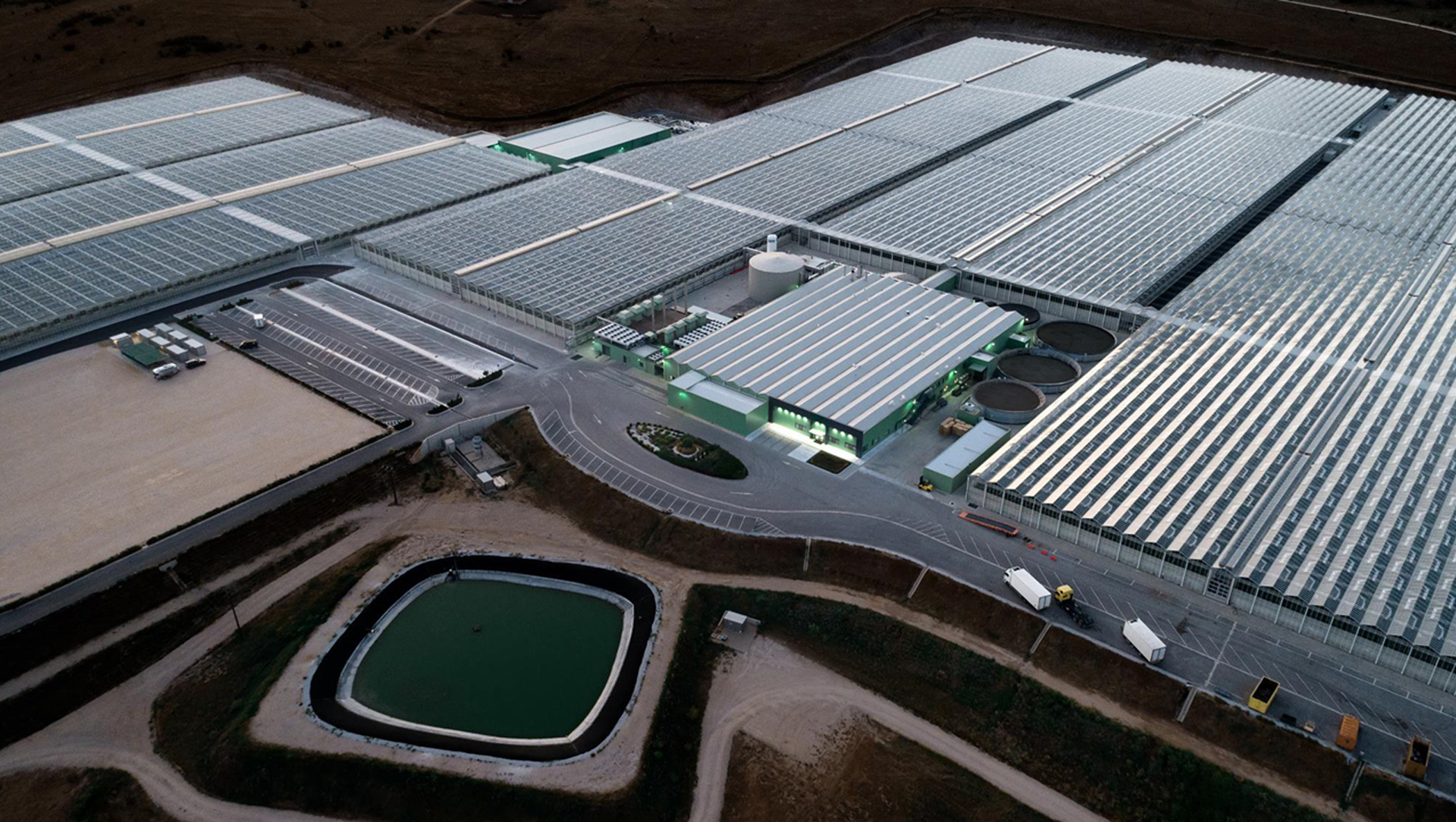
We design, build, and operate high-tech CEA greenhouse facilities that produce consistent, high-quality crops 52 weeks a year, in climates ranging from the Dutch lowlands to the Saudi desert. Our mission has always been the same: to provide sustainable taste anywhere.

What is controlled environment agriculture?

Controlled environment agriculture, or CEA, is the practice of growing crops inside an enclosed structure where the key variables affecting plant growth are precisely regulated. Temperature, humidity, CO₂ concentration, light, irrigation, and nutrient delivery are all managed to create optimal conditions, independent of what is happening outside

CEA ranges from simple structures that extend the growing season to fully automated, climate-controlled greenhouse facilities capable of year-round commercial production at scale. At Van der Hoeven, we operate at the high-tech end of this spectrum, designing and building commercial CEA facilities that integrate every system, from structure and climate to growing technology and automation, as a single engineered whole.

The defining characteristic of a well-designed CEA greenhouse is not the technology itself, but how it all works together. Climate control is only as effective as the irrigation system it complements. Automation is only as valuable as the climate data it acts on. Integration is what turns individual components into a performing facility.

Why controlled environment farming is changing food production

The pressures driving the shift toward CEA are not temporary. They are structural, and they are intensifying.

Climate change is disrupting conventional agriculture
Extreme heat, drought, flooding, and seasonal unpredictability are eroding the reliability of open-field production in every region of the world. The Food and Agriculture Organization estimates that climate-related crop losses average 21% annually across major staple-producing regions. CEA removes this dependency entirely. Inside a controlled environment, the growing conditions are defined by design, not by weather.

Population growth and urbanisation are changing where food needs to go
The United Nations projects that 68% of the global population will live in urban areas by 2050. Producing food close to consumers, rather than shipping it from distant growing regions, reduces transport costs, extends shelf life, and strengthens local food security. CEA facilities can be built anywhere, including in or near city centres, in arid regions, and in countries with limited arable land.

Resource efficiency is no longer optional
Water scarcity, rising energy costs, and increasing regulatory pressure on chemical inputs are making the resource efficiency of CEA an economic necessity, not just an environmental preference. High-tech CEA greenhouses use up to 90% less water than conventional open-field farming and significantly reduce the need for pesticides through the controlled environment itself.

Market demand requires consistent quality and supply 
Retailers, food service providers, and institutional buyers depend on a reliable supply of fresh produce that meets consistent quality standards year round. CEA makes this possible by creating stable growing conditions throughout the year.

Technologies used in high-tech greenhouses

Climate control

Climate control

Irrigation and water management

Irrigation and water management

Automation and data

Automation and data

Structural design

Structural design

Temperature, humidity, vapour pressure deficit, CO₂ concentration, and airflow are managed continuously. Our patented night cooling technology and the ModulAIR ventilation ridge enable precise climate management in challenging environments, including tropical, subtropical, and arid climates where conventional greenhouse ventilation is insufficient.

Water is captured, filtered, dosed with precisely calibrated nutrients, and recirculated in a closed loop. Van der Hoeven's in-house water and electrical engineering team designs these systems as an integrated part of each project, ensuring that water consumption, nutrient efficiency, and drainage management meet commercial targets from day one.

Our high-tech facilities can operate with automated seeding, transplanting, harvesting, packaging, and logistics. Climate computers manage environmental settings on the basis of real-time sensor data. Van der Hoeven integrates automation systems that can accommodate AI-driven growing decisions and digital monitoring platforms, making each facility ready for the next generation of precision horticulture.

The greenhouse structure itself, including its dimensions, materials, foundation, and load specifications, is engineered to suit local climate conditions. Van der Hoeven designs both semi-closed ModulAIR greenhouses and conventional Venlo glass turnkey facilities, selecting the right structure for each project and location. Using the CASTA greenhouse engineering model, structural loads such as wind and snow are accurately assessed to create a safe, durable, and material-efficient design that complies with recognized greenhouse construction standards and local regulations worldwide.

CEA at commercial scale: proven projects

Equinox Growers, Virginia, USA

Rows of fresh green and red lettuce growing inside a large modern greenhouse in Kasaoka, Japan, with glass roof and steel structure.

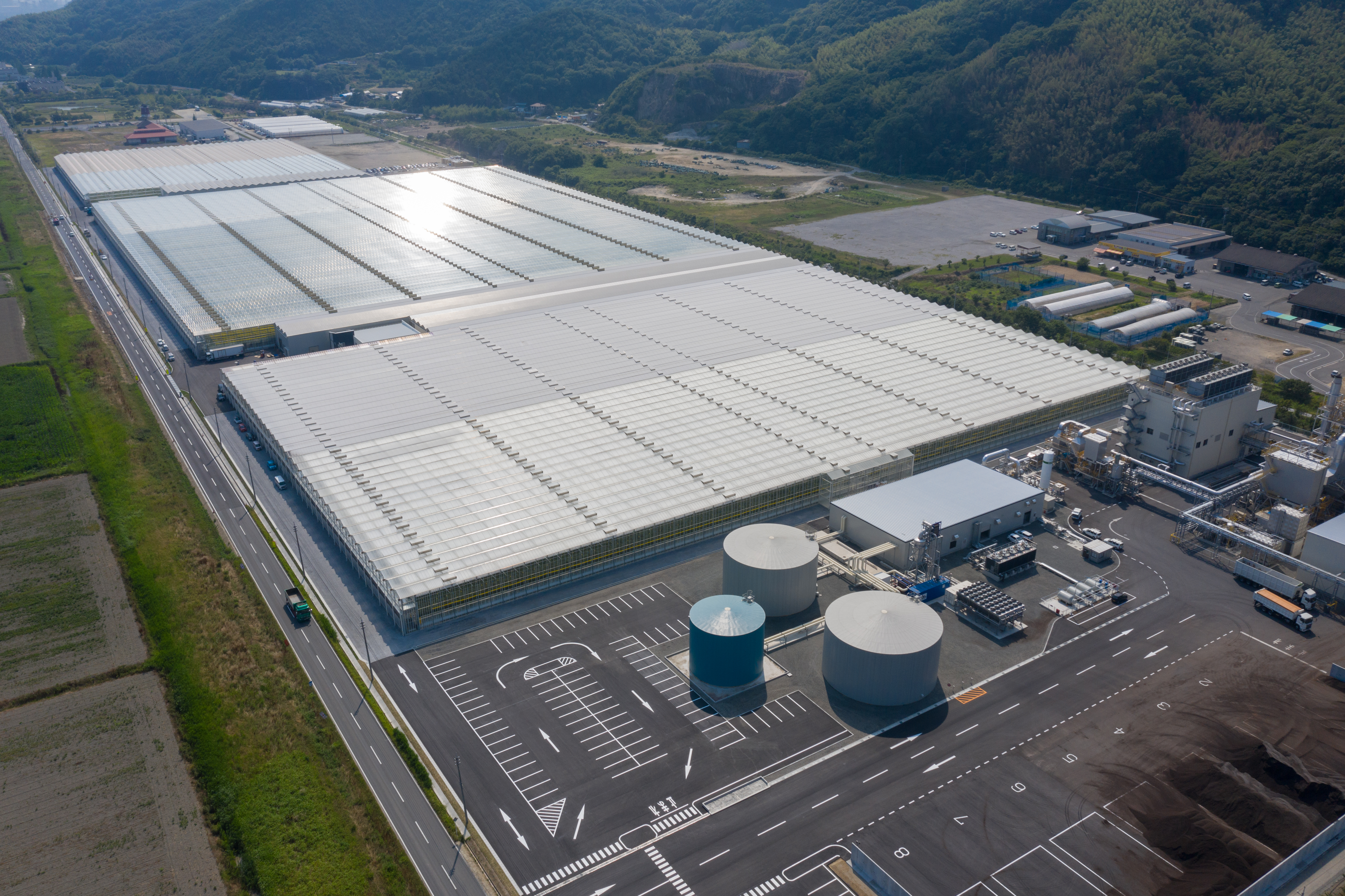
SARA Farms, Kasaoka Bay, Japan

Topian, Oxagon and Tabuk, Saudi Arabia

Armela Farms, Abu Dhabi, UAE

Our approach to CEA project development

Every Van der Hoeven project begins with a collaborative design process. Together with our customers, we evaluate local conditions, production goals, available resources, and long-term business objectives to develop the greenhouse concept that best fits their needs. From feasibility and design to operation and optimisation, we work as a long-term partner focused on achieving lasting results.

Location Based Analysis (LBA) We analyse the physical site in depth, solar radiation, temperature ranges, wind loads, water availability, energy sources, and local regulations, to design a greenhouse that makes optimal use of its environment while minimising resource consumption.

Life Cycle Analysis (LCA) We calculate the environmental footprint of each project across its entire life cycle, from raw material extraction through operations to end of life. This gives investors and stakeholders an honest picture of the project's sustainability performance. Read more about our sustainability approach.

System integration We design and commission every system as part of one coordinated project. This eliminates the performance gaps that arise when climate, growing, water, and automation systems from multiple suppliers are combined after the fact.

Operate and Maintain Our commitment does not end at handover. Through our Operate and Maintain division, we provide training, monitoring, and ongoing optimisation support to ensure each facility continues to perform and improve after delivery.

Frequently asked questions about CEA agriculture

What is controlled environment agriculture? 

Controlled Environment Agriculture (CEA) is the production of crops in a controlled growing environment, such as a high-tech greenhouse, where climate and resources are carefully managed to achieve consistent yields and quality throughout the year.

What technologies are used in CEA greenhouses? 

CEA greenhouses combine technologies such as climate control, irrigation, water recirculation, automation, energy systems, and data driven monitoring. These systems work together to create optimal growing conditions while reducing the use of water, energy, and other resources.

Who builds CEA greenhouse facilities? 

CEA facilities are built by specialist greenhouse integrators with expertise in structure, climate, growing technology, water systems, and automation. Van der Hoeven has been delivering turnkey CEA greenhouse projects for more than 70 years across more than 40 countries, with projects in the USA, Saudi Arabia, Japan, UAE, Australia, Kazakhstan, and beyond.

What is the difference between CEA and conventional greenhouse growing? 

A conventional greenhouse provides basic protection from outdoor conditions. A high-tech greenhouse actively controls all key growth variables, temperature, humidity, CO₂, light, water, and nutrients, using integrated technology systems. The result is higher yields, better consistency, lower resource use, and the ability to produce crops in climates where conventional greenhouse production would not be commercially viable.

What crops can be grown in a CEA greenhouse? 

A greenhouses support a wide range of crops. Leafy greens, herbs, and spinach are well suited to hydroponic, fast-cycle CEA systems. Vine crops including tomatoes, cucumbers, and peppers thrive in substrate-based systems. Soft fruit such as strawberries and blueberries, and floriculture crops are also produced at commercial scale in CEA facilities worldwide.

What is the future of controlled environment agriculture? 

CEA is positioned to play an increasingly important role in global food production as climate change, water scarcity, and population growth intensify the pressure on conventional farming. The CEA market is projected to grow significantly over the next decade, driven by demand for local, consistent, and sustainably produced food. Advances in AI-driven growing systems, renewable energy integration, and automation are steadily reducing operational costs and improving the commercial viability of CEA at scale.

Ready to develop a CEA greenhouse project?

Whether you are planning a first facility or scaling an existing operation, our team is ready to assess your location, your crop, and your investment objectives.

Bob
Hunsche

Manager Sales