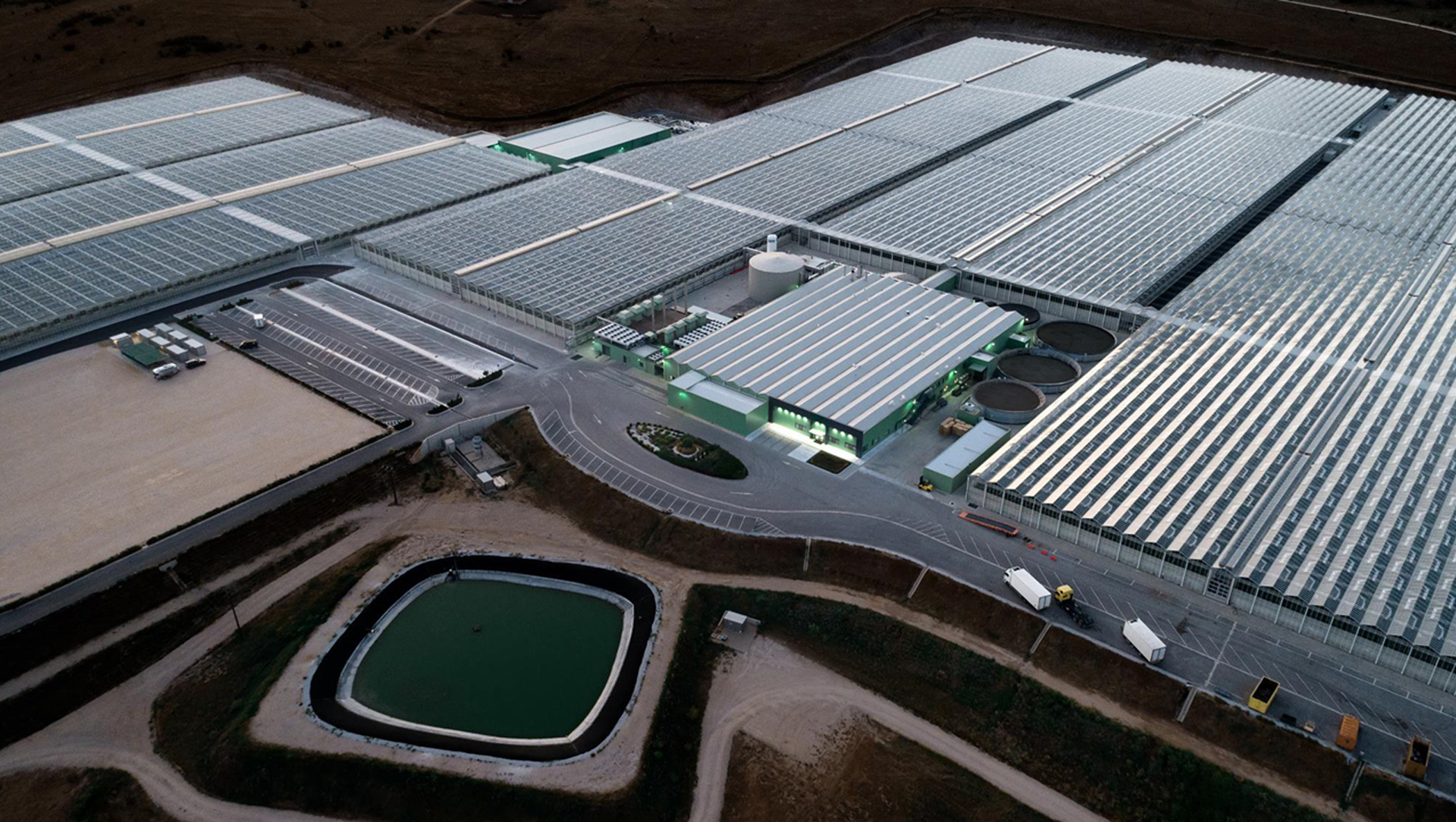
Hydroponic greenhouse systems

Precision growing. Proven at scale.

At Van der Hoeven, hydroponics is not a separate add-on. It is built into the foundation of everything we design. For decades, we have been integrating hydroponic growing systems into large-scale commercial greenhouses worldwide. From tomatoes in France to strawberries in the desert of Saudi Arabia, our hydroponic greenhouse systems deliver consistent quality, maximum yield, and measurable sustainability.

Whether you are planning your first commercial facility or expanding an existing operation, we design a system that fits your crop, your climate, and your business goals.

What is hydroponic farming?

Hydroponic farming is the practice of growing crops without soil. Instead of drawing nutrients from the ground, plants receive a precisely dosed solution of water and minerals directly at the root zone. The result is a growing system where every input, water, nutrients, CO₂, temperature, humidity, is fully controlled.

In a greenhouse environment, this control becomes absolute. External weather, seasonal variation, and soil conditions are removed from the equation entirely. What remains is a repeatable, high-performing production system that operates 52 weeks a year, regardless of geography.

Growing systems tailored to the specific needs

Based on the crop, local conditions, production targets, and business objectives, we develop a growing solution tailored to the specific needs of the operation for:

Mobile Gully System (MGS)

The MGS is Van der Hoeven's flagship hydroponic innovation for leafy greens, developed in partnership with our sister company Hortiplan. Plants are seeded and automatically transported through the greenhouse on motorized gutters. As they grow, the system spaces them to optimize light distribution, airflow, and growing density.

Van der Hoeven introduced the MGS in a semi-closed greenhouse for the first time in 2017, a world first. Since then, the system has been implemented in commercial facilities across the USA, Japan, the UAE, Canada, and beyond.

Proven at commercial scale

Equinox Growers, Virginia, USA

Rows of fresh green and red lettuce growing inside a large modern greenhouse in Kasaoka, Japan, with glass roof and steel structure.

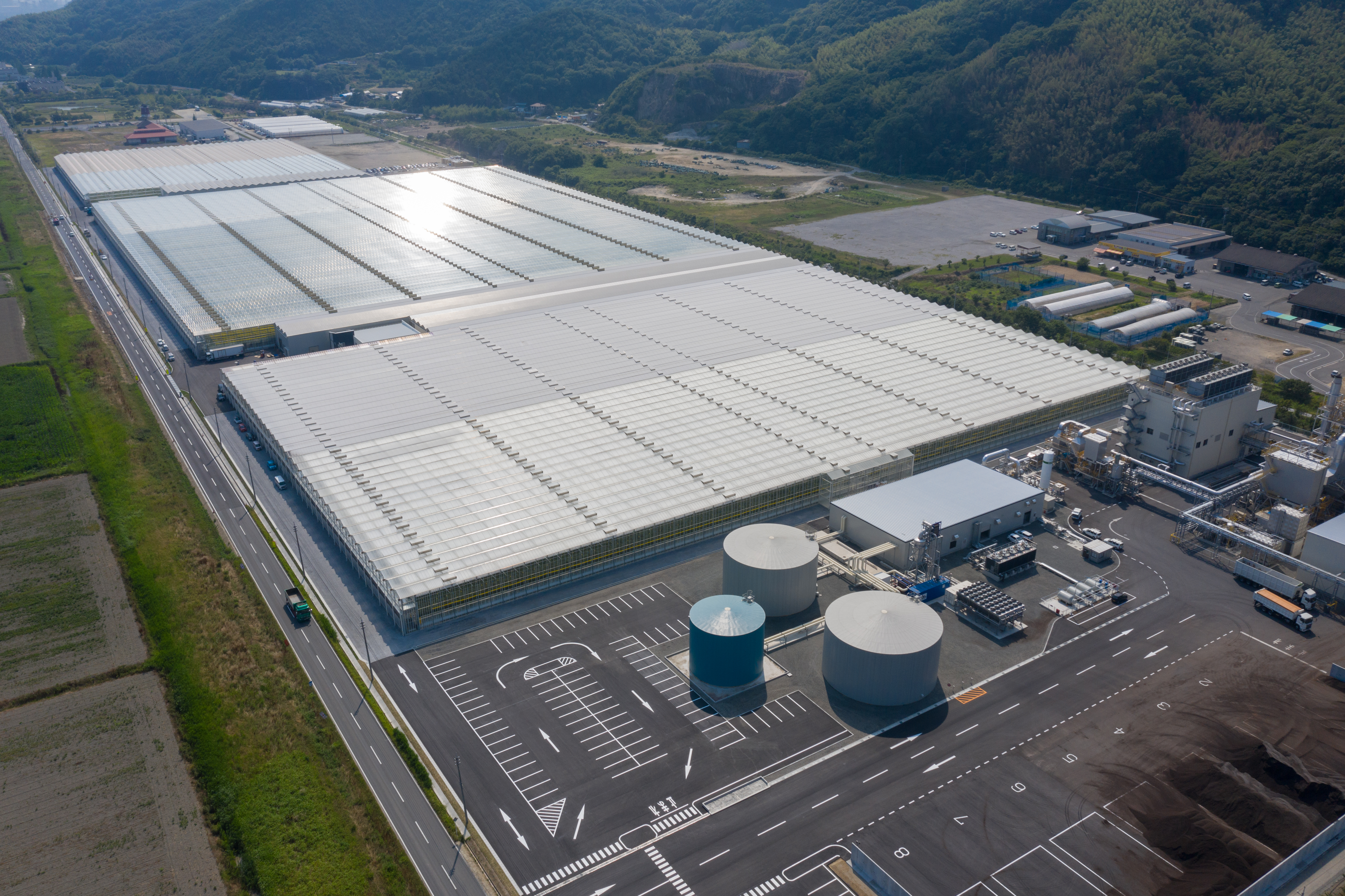
SARA Farms, Kasaoka Bay, Japan

Topian, Oxagon and Tabuk, Saudi Arabia

Why hydroponic farming outperforms conventional growing

Up to 90% less water use

Up to 90% less water use

Significantly higher yield per square meter

Significantly higher yield per square meter

Consistent quality, 52 weeks a year

Consistent quality, 52 weeks a year

Reduced or eliminated pesticide use

Reduced or eliminated pesticide use

Production close to the consumer

Production close to the consumer

Hydroponic systems operate in a closed loop. Nutrient solution is captured, filtered, and recirculated. Almost nothing is lost to the soil or groundwater. In water-scarce regions, and increasingly in all regions, this is not a preference. It is a necessity.

Without soil structure, root systems develop efficiently and fast. Combined with optimized climate, CO₂ enrichment, and precise light management, crop cycles shorten and yield per square meter increases substantially compared to field production.

Hydroponic greenhouse farming removes seasonal dependency. Crops grow to the same specification in January as in July. For buyers and retailers who require consistent supply, this predictability has direct commercial value.

Soil is the primary entry point for many pathogens and soil-borne pests. Remove the soil, control the environment, and the need for chemical inputs drops dramatically. This meets the food safety requirements of demanding retail markets, and the growing expectations of consumers

A hydroponic greenhouse can be built anywhere, near a distribution hub, in an urban area, or in a region with extreme climate. Shorter supply chains mean fresher produce, lower transport costs, and stronger local food security.
Integrated by design

What distinguishes a Van der Hoeven hydroponic greenhouse from a system assembled from separate suppliers is integration. Every component, the greenhouse structure, the climate system, the water and electrical infrastructure, the irrigation, the hydroponic growing system, and the automation, is designed, engineered, and commissioned as a single coordinated whole.

This eliminates the performance gaps that arise when systems from different suppliers must work together. It also means that when something needs to be adjusted, there is one point of contact and one team with full knowledge of the entire facility.

All Van der Hoeven projects are delivered in accordance with HortiQ, an international quality management standard based on ISO 9001.

Frequently asked questions about hydroponic greenhouse

How do hydroponic greenhouse systems work?

Plants grow in a nutrient-enriched water solution instead of soil. In a greenhouse, this is combined with controlled climate, lighting, and CO₂ management to create optimal growing conditions year-round. The specific hydroponic system, NFT, DWC, MGS, or ebb and flow, is selected based on the crop and production goals.

How efficient are hydroponic greenhouses compared to field farming?

Commercial hydroponic greenhouses typically use up to 90% less water than conventional open-field production. Yield per square meter is significantly higher, and production continues 52 weeks a year regardless of season or climate. The Equinox Growers facility in Virginia achieves approximately 90% land savings and 87% water savings compared to field equivalents

What crops can be grown hydroponically in a greenhouse?

Leafy greens, including lettuce, spinach, herbs, and baby leaf, are the most common hydroponic greenhouse crops due to their short cycles and high yield potential. Vine crops such as tomatoes, cucumbers, and peppers, soft fruit including strawberries and blueberries, and floriculture are also well suited to hydroponic production in a controlled environment.

Does Van der Hoeven design the hydroponic system as part of the turnkey project?

Yes. Hydroponics at Van der Hoeven is not a separate service. The growing system is an integrated component of the complete turnkey project, designed alongside the greenhouse structure, climate technology, water systems, and automation from the very first concept stage.

Can a hydroponic greenhouse system be built in a hot or arid climate? 

Yes. Our semi-closed ModulAIR greenhouse is specifically engineered for challenging climates including desert regions. Projects in Saudi Arabia, the UAE, and Australia demonstrate that high-quality hydroponic production is achievable in extreme heat, provided the climate and water systems are correctly designed.

Ready to explore hydroponic greenhouse farming?

Our team designs hydroponic systems for commercial growers, investors, and development projects worldwide. Tell us about your project and we will assess what the right solution looks like.

Bob
Hunsche

Manager Sales